
Experts suggest that a revamp in the surrounding infrastructure should take care of the issues plaguing the VB-2, stressing that the lightweight nature of the trains is what allows for higher speeds, and that needless design additions may hamper the train's efficiency.

More than 100 million users with 5G-ready smartphones wish to upgrade to a 5G subscription in 2023 while a majority of them are open to adopting a higher data-tiered plan in the next 12 months, a report by Ericsson Consumer Lab has shown. Titled "Promise of 5G in India", the study carried out in the second quarter this year reflects the views of 300 million urban smartphone users. According to the study, consumer 5G readiness remains one of the highest in the world.
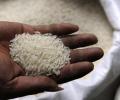
Increasing sugar production shall create problems for the industry, whereas boosting ethanol output can bring rich returns, Union Minister Nitin Gadkari told sugar mills on Wednesday. Speaking at a conference on sugar and ethanol, organised by the Indian Sugar Mills Association, Gadkari surprised the audience comprising senior executives of sugar mills by stating that the future will become bleak for the industry if it continues to churn out high quantities of sugar. "We need more ethanol than sugar. Also, bio-ethanol is the way to go as it can be stored for a longer duration as compared to conventional ethanol. "If you increase sugar production, it will create more problems for you.

"In principle, the ask in return is that India should not support the G7 (Group of Seven) proposal. "A decision on this issue will be taken later following talks with all the partners," an official with the Ministry of External Affairs (MEA) said.These "substantial discounts" will be steeper than those offered by Iraq in the past two months, officials said.

The Organization of the Petroleum Exporting Countries (Opec) and its partners, such as Russia, collectively termed Opec+, have decided to cut crude oil production by 100,000 barrels per day (bpd) from October onwards, at a meeting on Monday. In a step that may increase prices in India, the group has decided to reduce output quotas for October, after a fall in global oil demand outlook. The cut in output is equal to 0.1 per cent of global supply.

Indian officials will focus on expanding the country's footprint in oil-rich Siberia when they meet their Russian counterparts at the four-day 7th Eastern Economic Forum beginning Monday in Vladivostok. The two sides will discuss the possibility of joint oil exploration in the area and cooperation in running offshore oil and gas fields Western companies are in the process of exiting, officials said in New Delhi. Pavan Kapoor, India's ambassador to Russia, will lead the official-level talks at the summit scheduled September 5-8.

In a first of its kind move, the Indian Railways Catering and Tourism Corporation (IRCTC), the ticket booking arm of the Indian Railways, is looking to monetise its bank of passenger data while conducting business with private and government companies. IRCTC has a large bank of data related to every online railway ticket ever generated as it is the country's only railway ticketing platform, an IRCTC official told Business Standard. The public sector undertaking, which has sought the services of a consultant to assist with the monetisation process, plans to raise Rs 1,000 crore through this exercise.
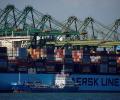
The Ministry of Ports, Shipping and Waterways has released a draft to amend the Indian Ports Act, 1908, which aims to bring in sweeping reforms in the sector by bringing non-major ports into the national fold, creating a new mechanism for resolution of disputes, and empowering maritime state development council (MSDC). The draft bill will see comments from stakeholders before being tabled in Parliament. "The Indian Ports Act, 1908 is more than 110 years old. It has become imperative that the Act is revamped to reflect the present-day frameworks, incorporate India's international obligations, address emerging environmental concerns, and aid the consultative development of the ports sector in the national interest," the shipping ministry said.
Buoyed by higher demand for crude oil and imported coal, Indian ports recorded a growth of 11 per cent in traffic during the April-June quarter of 2022-23. This shows that the economy is opening up, a report by DAM Capital said. The volume increase assumes significance since both prices of crude oil and imported coal have been soaring this year. Indian coal companies were pressed for supply amid a thermal coal crisis earlier in the year.
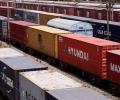
This alternative is being planned as the existing projects continue to be delayed due to land acquisition troubles. The ministry is thinking of adding new track lines to its existing eastern and western DFCs passing major areas in the proposed stretches, senior officials said.
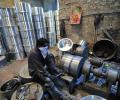
With the Covid-19 pandemic showing signs of ebbing and economic activity picking up, factory owners in Jalandhar had hoped that the worst was over. However, the heat wave in April and extensive power cuts that came with it, have crushed their hopes. The city's large number of micro, medium and small enterprises (MSMEs) are now gearing up for yet another struggle, this time to survive with the shortage of power that is severely impacting their operations.

The Indian Railways has decided to not cancel any more passenger trains to accommodate more freight traffic for coal transport. It will also gradually restore the ones it cancelled recently. The national transporter is of the view that coal supply is now reaching normative levels and does not need any more special measures. "Early data suggests that coal supply has stepped up since the passenger trains were cancelled.
Hit by Covid waves and slowdown, the Indian Railways has still not been able to return to its pre-pandemic passenger traffic, data by ministry of Railways has revealed. In February, the national transporter received 413 million ticket bookings - 43 per cent higher than the previous year, but only 61 per cent of the 675 million in February 2020. According to the statistics, that was the last time the Railways saw more than 500 million bookings in a single month.
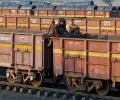
Amid rising demand for coal freight and an aggressive push towards diversifying its freight basket, Indian Railways is planning to buy 100,000 more wagons over the next three fiscal years. The procurement plan will majorly comprise BOXN wagons, which are used to transport coal, said a senior Ministry of Railways official. Notably, the railways recently floated a sizeable tender worth Rs 35,000 crore of wagons, which had been in the pipeline since 2018. "Our Budget Estimates for freight increase were conservative.

If 2019-20 (FY20) was an unusual year for highway construction in India, with the pace of work slowing down for the first time since the Narendra Modi government assumed power in 2014, largely due to the general elections in May and liquidity crunch, the outbreak of the Covid-19 pandemic in 2020-21 (FY21) only made matters worse with lockdowns and labour unavailability. The pace of highway construction in 2021-22 (FY22) has not been able to bulldoze the pandemic barriers in a year marred by two Covid-19 waves - the second at the start of the fiscal year, the third towards the close. With localised lockdowns and restrictions on mobility, highway construction growth in the country has now fallen to a five-year low.

Funding challenges are not limited to just one think tank. Several scholars say that access for conducting research and getting foreign funds has become a major hurdle for think tanks, with the government raising many questions regarding such inflows. As a result, many think tanks are keeping a low profile and becoming less prolific.

It bounced back from the historic low of 41 recorded in the April-June quarter, during the initial days of the pandemic and lockdown.
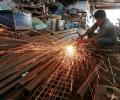
Exim Bank pointed out that recent performance of the manufacturing sector in India is indicative of an underlying inertia.

The background work of creating a suitable digital architecture of a website also remains unfinished as it has been a challenge to shortlist technology partners.

Created over the past 12-15 months, Niti's new Export Preparedness Index flagged the major intra-and inter-regional disparities in export infrastructure, problems in trade support and lack of unique exports as the main challenges hampering export growth.
 © 2026 Rediff.com - Investor Information - Advertise with us - Disclaimer - Privacy Policy - Sitemap - Feedback - About us - Terms of use - Grievances